

Updated Oct. 24, 2026, 11:58 a.m. ET: Adds that the satellite launched Oct. 1 and that Google confirmed it is operating as expected (see our launch coverage), and corrects the prototype’s hardware details.
Google’s first Project Suncatcher test satellite is set to fly Oct. 1 on SpaceX’s Transporter-18 rideshare, a Falcon 9 mission from Vandenberg Space Force Base in California. It carries Google’s Tensor Processing Units, and the goal is to see how those AI chips handle “the physical stress of spaceflight and the radiation and thermal extremes of space,” Google said Thursday.
Google announced Suncatcher last year as a long-term research moonshot into whether space could one day host scalable machine learning infrastructure. The pitch is power: the company says satellites in low Earth orbit get near-constant sunlight and can generate up to eight times more solar power than panels on the ground.
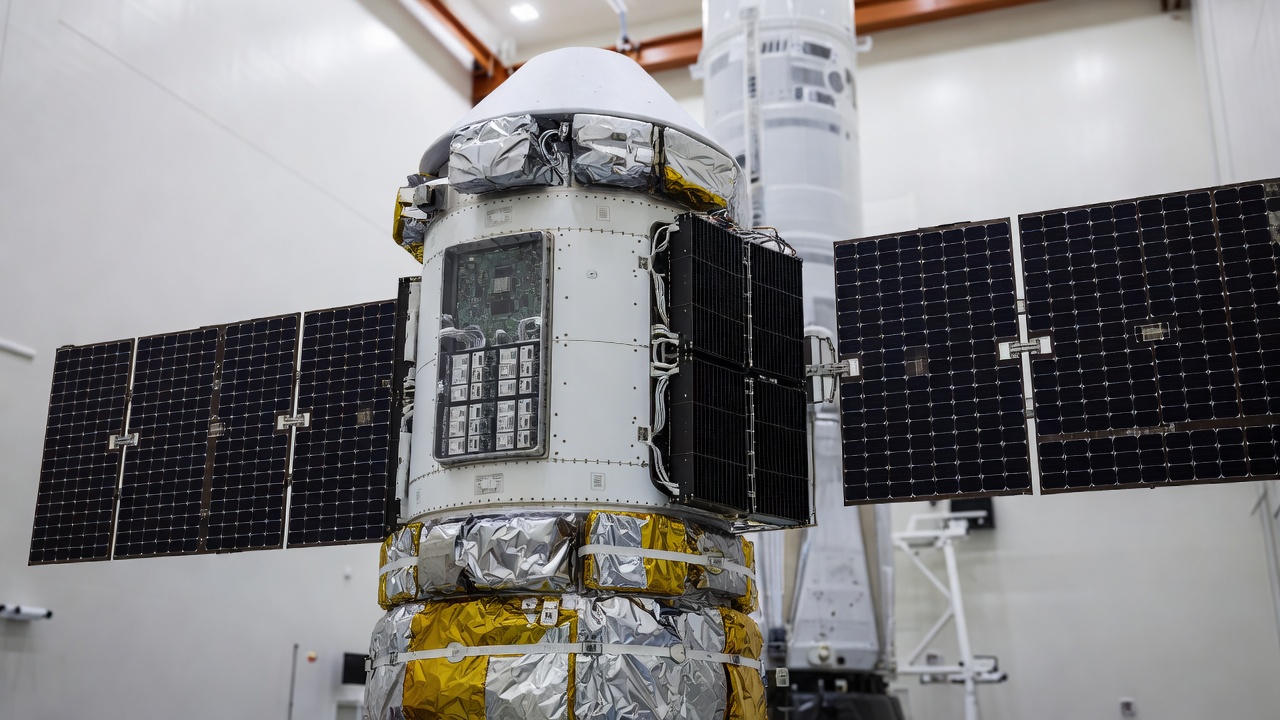
The first satellite, dubbed MVP, is about the size of a refrigerator and holds four TPUs, Ars Technica reported. Its solar panels supply only about one kilowatt, according to The New York Times. Google didn’t build the spacecraft. Planet Labs had already built it for an early test, and Google put its chips inside so it could fly sooner than the two custom satellites it had planned for 2027.
Cooling is the hard part. With no air in a vacuum, heat can only leave through radiators, so Google’s design uses a layer of thermal interface material that connects the chips to aluminum and copper heat pipes, which carry heat to a radiator. Google has tested the setup in a thermal vacuum chamber, but the chips can run for only about 15 minutes before they have to shut down and cool off, Suncatcher senior director Travis Beals told the Times, as The Verge noted.
During those bursts, Google plans to run Gemini models on the TPUs. Ground tests showed the chips can take high g-forces and radiation, though Google says “some things can only be tested in space.” The satellite is expected to operate for a few months.
Google isn’t the only company chasing the idea. SpaceX and Starcloud are also pursuing data centers in low Earth orbit, Reuters reported. Google’s longer-term plan calls for clusters of satellites linked by high-bandwidth lasers, with its next milestone set for 2027.
Even so, the team expects it will be years before Suncatcher goes from “project” to “product,” according to Ars Technica.


 WebProNews is an iEntry Publication