

Updated Oct. 21, 2026, 1:20 a.m. ET: Adds the IMF’s Oct. 13 World Economic Outlook forecast of 3.1% global growth in 2026 and 3.4% in 2027.
BANGKOK — Spending on artificial intelligence infrastructure is helping keep the world economy growing at about 3% a year despite high energy prices, International Monetary Fund Managing Director Kristalina Georgieva said on Monday, Oct. 12, at the opening of the IMF and World Bank annual meetings in the Thai capital.
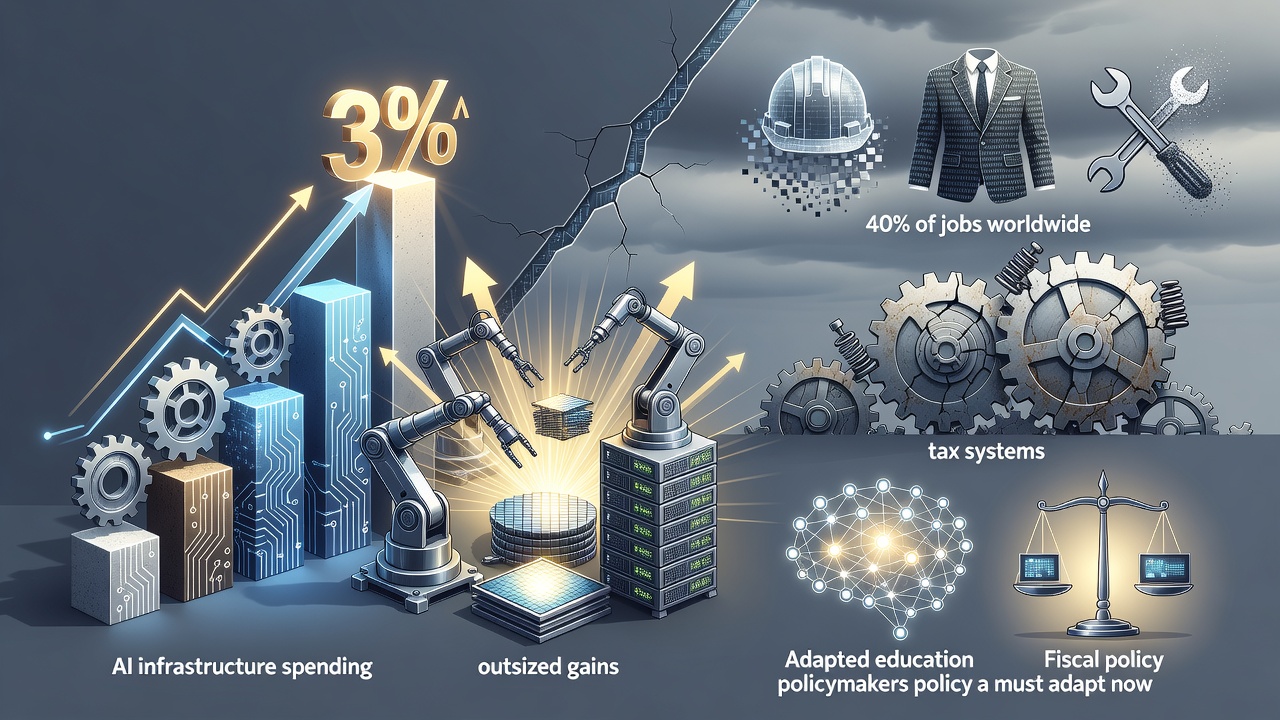
Georgieva said the AI build-out was delivering “a demand shock, an investment shock” to the global economy. “That shift into higher gear is what is keeping the world economy growing at around 3 per cent, despite the fact we are being dragged down by the energy supply shock,” she said, according to Reuters.
Asia’s hardware suppliers gain most
She estimated that the AI boom could add half a percentage point to a full point to annual growth in advanced Asian economies, and 0.2 to 0.8 percentage point in emerging Asian economies. The U.S., China and India are the most important producers in the AI supply chain, she said, but many of the other leading players are Asian suppliers of chips, chip-making equipment and robots. Thailand, this year’s host, is among the countries positioned to benefit.
The trade involved is large. In a speech in Singapore the week before, Georgieva said AI hardware and related tech products now account for more than a tenth of global goods trade, The Next Web reported. Demand is set to keep climbing as major tech companies plan to spend between $660 billion and $690 billion on AI this year.
For aging economies, the upside could be significant. A growth boost of up to a percentage point in advanced Asia “is a very big deal,” Georgieva said, and would “more than offset” the drag from aging populations across the region, The Japan Times reported.
Jobs and tax systems will have to adapt
Georgieva also said governments need to prepare for the technology’s effect on work. She called AI “a slow-moving tsunami, but tsunami none the less,” and said the IMF estimates it will eventually affect about 40% of jobs worldwide, improving some and downgrading or eliminating others. Advanced economies are the most exposed, with about 60% of jobs affected.
Routine, repetitive roles are shrinking first, she said, while employment is rising in lower-paying sectors such as construction, which she said is “not a story to celebrate.” She also cited an initial study showing that 10% of U.S. jobs already require AI skills, India Today reported. Because AI tilts the economy toward capital and away from labor, the traditional base for income taxes, she urged policymakers to rethink education and tax policy now.
“AI, love it, hate it. It’s already here,” Georgieva said.
Singapore President Tharman Shanmugaratnam, speaking on the same panel, said “the first rung in employment, your first job upon graduation, is now seeing less demand.” World Bank President Ajay Banga said the bank is backing “small AI” tools that don’t rely on large language models, aimed at farmers, health systems and teachers in emerging markets.
Some 18,000 people were expected at the weeklong meetings, including finance officials from the IMF’s 191 member countries. Several ministers stayed home to focus on domestic priorities, among them U.S. Treasury Secretary Scott Bessent.
The IMF published its updated World Economic Outlook on Tuesday, Oct. 13, raising its 2026 global growth forecast slightly to 3.1% from the 3% it projected in July, and forecasting 3.4% growth in 2027. The report credited “strong investment in artificial intelligence” with helping activity hold up and listed stronger AI investment and productivity gains among the upside risks. WebProNews covered the report’s warnings on debt and market risk in a separate story.


 WebProNews is an iEntry Publication